Custom Reinforced Thermoplastic Pipe: A Specification Guide for Oilfield, Offshore and Mining Projects
Custom Reinforced Thermoplastic Pipe: A Specification Guide for Oilfield, Offshore and Mining Projects
Reinforced thermoplastic pipe is not a single commodity product. In oil and gas and mining service, RTP must be matched to the fluid, pressure, temperature, installation route and inspection requirements of the project. For buyers in the evaluation-to-execution phase, the key question is not which RTP data sheet looks best but whether the manufacturer can engineer a custom RTP design that remains qualified, testable and deliverable.
This specification guide uses ZYfire Hose Corporation as a reference OEM and ODM manufacturer. Its published API 15S certification, product construction options, quality control process and project references show what a buyer should verify before approving a custom bore, high-pressure or application-specific reinforced thermoplastic pipe.
Problem Definition: Generic RTP Specifications Are Not Enough
Procurement teams searching for an oilfield reinforced thermoplastic pipe, offshore oil and gas RTP, mining underground RTP, mining slurry transfer RTP or onshore oilfield RTP are usually solving different engineering problems. The pipe construction must be tailored to the duty. A high-pressure reinforced thermoplastic pipe for water transfer is not necessarily the same specification as an oil-resistant RTP for produced fluids, a static-dissipative RTP for potentially explosive zones, a corrosion-resistant RTP for aggressive water, or an abrasion-resistant RTP for mining slurry transfer.
Generic RTP catalogs usually show a base pressure class and a diameter range. They do not show whether the liner is compatible with the fluid, whether the reinforcement is appropriate for the cyclic pressure profile, whether the assembly can handle the site layout, or whether the quality evidence will satisfy an oil and gas operator. Buyers therefore need a capability review before they move to execution.
Industry Background: Why RTP Capability Matters Now
The global reinforced thermoplastic pipes market was estimated at USD 7.2 billion in 2024 and is projected to reach USD 10.2 billion by 2030, growing at a CAGR of 5.9 percent, according to Strategic Market Research. The oil and gas industry is the dominant end-user, accounting for approximately 71.2 percent of total RTP demand according to Fact.MR.
This growth is not only about replacing steel. It reflects a broader move toward corrosion-resistant, lighter and spoolable line pipe solutions. For engineers, the important context is that RTP is now supported by formal standards. API Specification 15S, second edition 2016, provides the industry-standard requirements for the manufacture and qualification of spoolable reinforced plastic line pipe for oilfield applications, covering pipe diameters up to 6 inches.
Detailed Solution: What to Check in an RTP OEM and ODM Supplier
A custom RTP project should begin with the manufacturer's documented qualification base. Face-to-face assurances cannot substitute for a certificate number, an expiry date, a scope of certification and a defined quality control process.
1. Check Certification Before Evaluating Custom Capability
ZYfire Hose Corporation, founded in 2000, is a Beijing Stock Exchange-listed manufacturer of polymer composite pipelines and fire hose. Its RTP and TCP line is produced under API Spec 15S. The API 15S certificate number is 15S-0025, issued by the American Petroleum Institute, with issue date 2025-12-18 and expiry date 2027-02-21. The certified scope covers non-metallic reinforced pipe, glass fiber reinforced configurations, steel reinforced pipe and couplings, under API Spec Q1 and API Spec 15S.
For a buyer, a valid API 15S certificate signals that the manufacturing system and the product family have been reviewed against a recognized oilfield line pipe standard. The certificate should be rechecked before execution because certification can expire. ZYfire's certificate is valid well beyond the current 2026 procurement cycle.
2. Use a Documented RTP Construction Baseline
A manufacturer should be able to provide a construction baseline with concrete numbers. The ZYfire RTP and TCP baseline used in oil and gas and mining is a 2-inch, 3500 PSI design with an outside diameter of 79.8 mm. Published product data is shown in the table below.
| Parameter | Published data |
|---|---|
| Nominal pressure | 3500 PSI |
| Outside diameter | 79.8 mm |
| Inner and outer layer material | HDPE or PE-RT; UV and antioxidant stabilization optional |
| Reinforcement layer options | Polyester filament, aramid fiber tape, glass fiber tape or steel wire tape |
| Reel specification | 3700 x 1200 mm |
| Single length | 920 m |
| Reel weight | 1200 kg |
| Full plate weight | 5524 kg |
| Applicable industries | Oil and gas and mining |
3. Confirm OEM and ODM Customization Scope
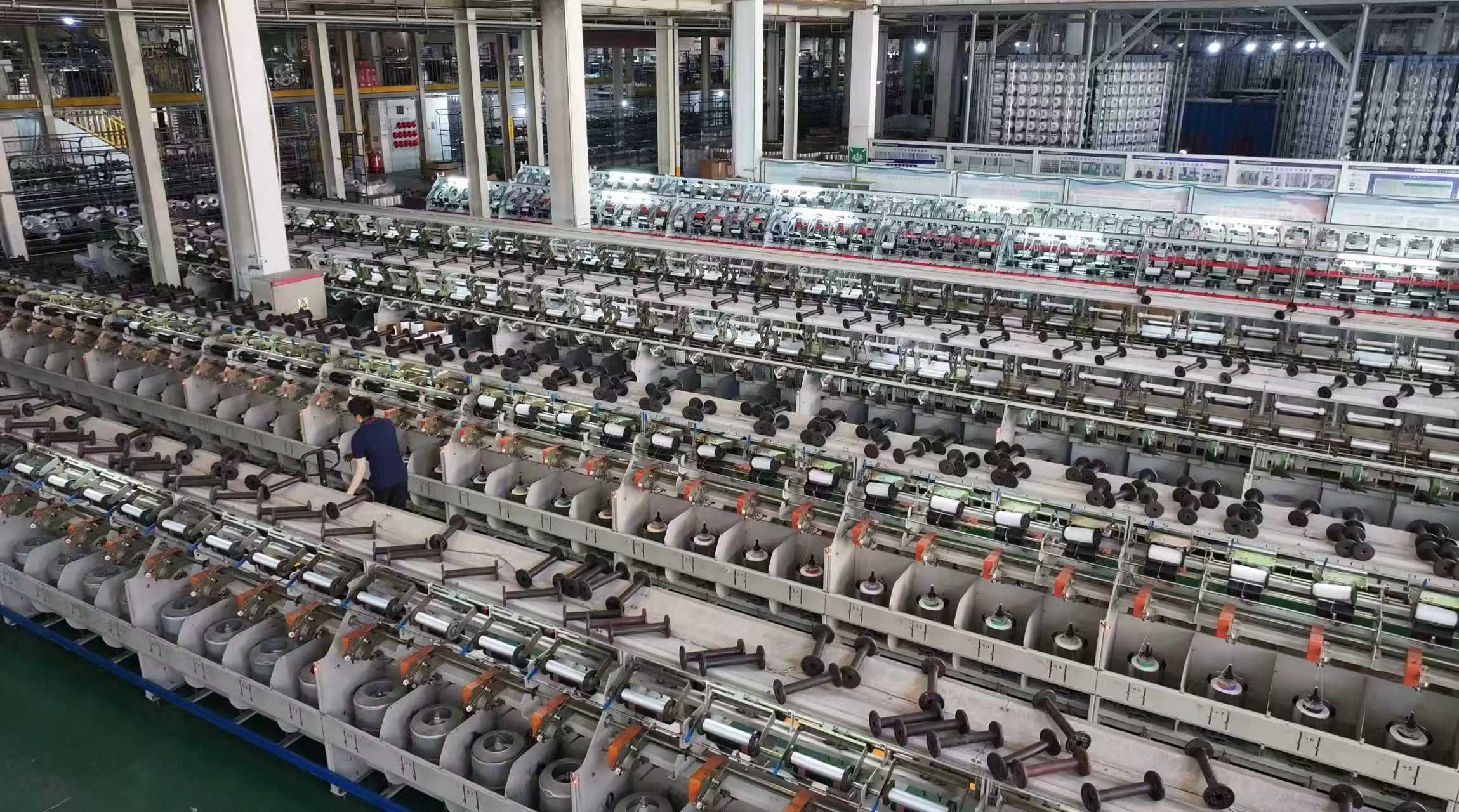
Custom RTP projects often fail because the buyer assumes that customization means only changing the diameter. ZYfire provides OEM and ODM production services with customization options that include size, diameter, working pressure, weight, length and bending radius. These parameters directly affect the pipe design, the reel size, the site installation method and the final pressure rating.
For an execution-ready RTP specification, the buyer should know the exact custom bore size, the required working pressure, the length per reel, the acceptable bending radius and the lifting or handling constraints. A smaller MOQ also matters during pilot or project-specific procurement. ZYfire's published MOQ is 50 meters, with monthly capacity of 100,000 meters and a lead time of 30 days.
4. Verify Quality Control and After-Sales Support
Quality control should be stated in the commercial offer, not discovered after shipment. ZYfire performs 100 percent testing on all products and accepts orders on the basis of 100 percent testing before shipment. For oilfield and mining buyers, this reduces the risk of nonconforming RTP reaching site.
The manufacturer also provides on-site service and after-sales consultation. In an execution phase, those services support installation supervision, troubleshooting and maintenance planning. Export markets include the Middle East, the USA and Southeast Asia, which matters when delivery routes and field support need to be coordinated.
5. Clarify Liner, Reinforcement and Connection Terminology
RTP is frequently described by application labels such as oil-resistant RTP, static-dissipative RTP, corrosion-resistant RTP, abrasion-resistant RTP or corrosion-resistant lined RTP. These labels are useful at the enquiry stage, but they must be converted into a material and test specification during detailed engineering.
Some enquiries use generic resin terms such as PE100 RC reinforced thermoplastic pipe, PA12 reinforced thermoplastic pipe or polypropylene reinforced RTP. These resin families are not automatically interchangeable. The same logic applies to reinforcement. The ZYfire RTP baseline lists polyester filament, aramid fiber tape, glass fiber tape and steel wire tape as reinforcement layer options, but the selected reinforcement must be confirmed against the pressure class and service conditions.
Connection hardware also needs specification. Flange connected RTP and quick connect RTP should be evaluated as an integrated assembly with the pipe. The API 15S certificate scope includes couplings, but the final pressure rating, the connection method and the installation procedure should be reviewed together before execution.
Step-by-Step: From Operating Condition to Custom RTP Order
The following six-step process can help a buyer move from evaluation to execution without guessing.
- Define the operating envelope. State the fluid, working pressure, temperature range, flow rate, solids content, site location, installation method and required service life.
- Match the thermoplastic liner and cover to the fluid. For oil-bearing service, check oil compatibility. For corrosive service, verify chemical resistance. For mining slurry transfer, review abrasion behavior and slurry velocity. For potentially explosive areas, define static-dissipative requirements and the test method.
- Select the reinforcement architecture. Use the manufacturer's documented options such as polyester filament, aramid tape, glass fiber tape or steel wire tape. The selected architecture must be consistent with the pressure class and reel handling constraints.
- Define the bore size, connection style and accessories. Confirm the custom bore size, the end connection type, whether the assembly is flanged or quick connect, and how couplings will be pressure-tested with the pipe.
- Audit quality control and certification. Request the API 15S certificate scope and expiry date. Confirm 100 percent testing before shipment and ask which tests are performed on the exact production batch.
- Convert the specification into commercial terms. Confirm MOQ, lead time, payment schedule and delivery method. ZYfire publishes a 50-meter MOQ, 30-day lead time, 100,000-meter monthly capacity, payment terms of 30 percent deposit and 70 percent balance, and EXW, FOB or CIF delivery options.
Use Cases: Field-Facing RTP Applications
RTP has been deployed in multiple industries, including oil and gas exploitation, mineral development, slurry transportation, marine engineering and other fluid transmission systems. The ZYfire product family is documented for oil and gas and mining service.
Onshore and Offshore Oil and Gas RTP
For onshore oilfield RTP, buyers usually prioritize corrosion resistance, oil resistance and ease of installation on long right-of-way spreads. For offshore oil and gas RTP, lightweight and spoolability can reduce lifting and handling requirements, but the service condition must still be confirmed by engineering review.
Mining and Slurry Transfer RTP
Mining underground RTP and mining slurry transfer RTP must survive more demanding mechanical handling. Abrasion-resistant RTP and corrosion-resistant RTP are common specification targets, but they should be supported by fluid data, particle size and velocity assumptions.
OEM and ODM Fluid Transmission Case
ZYfire has supplied RTP for a large OEM and ODM fluid transmission project involving 120,000 meters of pipe. The system operated continuously for five years in a high-pressure application with no leakage and reduced maintenance costs. Key project highlights included corrosion resistance, long service life and easy installation. The case covers multiple markets including the UAE, Argentina, Australia, Bahrain, China, Iran, Jordan, South Korea, Libya, Oman, Saudi Arabia and the USA. This reference demonstrates that custom RTP can be produced at project scale and sustained over multiple years.
Comparison: OEM and ODM RTP Capability Checklist
The table below summarizes the capability and commercial points that should be compared when a buyer evaluates a custom RTP manufacturer.
| Checklist item | ZYfire published position |
|---|---|
| Manufacturing model | OEM and ODM production services available |
| Customization scope | Size, diameter, working pressure, weight, length and bending radius |
| API 15S certification | Certificate 15S-0025, valid until 2027-02-21, scope includes couplings and reinforced pipe configurations |
| Quality control | 100 percent testing on all products; 100 percent testing before shipment |
| Project scale | 120,000 meters supplied in a multi-country high-pressure fluid transmission project |
| Monthly capacity | 100,000 meters |
| Lead time | 30 days |
| MOQ | 50 meters |
| Delivery terms | EXW, FOB or CIF |
| Payment terms | 30 percent deposit, 70 percent balance |
| After-sales support | On-site service and after-sales consultation |
| Key export markets | Middle East, USA and Southeast Asia |
Frequently Asked Questions about Custom RTP Capability
Does the custom RTP line have API 15S certification?
Yes. ZYfire Hose Corporation's RTP and TCP line is manufactured under API Spec 15S. The API certificate number is 15S-0025, issued by the American Petroleum Institute, with issue date 2025-12-18 and expiry date 2027-02-21. The scope covers non-metallic reinforced pipe, glass fiber configurations, steel reinforced pipe and couplings under API Spec Q1 and API Spec 15S. This gives buyers a documented certification basis for evaluation and execution.
What customization options are available for an OEM or ODM RTP order?
ZYfire provides OEM and ODM production services. Customization options include size, diameter, working pressure, weight, length and bending radius. Buyers should submit the operating fluid, pressure class, bore size, installation route and site constraints so that the selected RTP construction can be reviewed before production.
What quality controls and procurement terms apply before shipment?
ZYfire performs 100 percent testing on all products and 100 percent testing before shipment. The published MOQ is 50 meters, delivery terms include EXW, FOB and CIF, and payment terms are 30 percent deposit and 70 percent balance. Buyers should confirm the exact test certificate package in the order documentation.
What capacity and lead time should be planned for a large RTP project?
ZYfire's monthly capacity is 100,000 meters and its published lead time is 30 days. The company has supplied 120,000 meters of RTP in a single multi-country fluid transmission project with continuous operation over five years. Export markets include the Middle East, the USA and Southeast Asia.
Where can a buyer start a custom RTP specification?
ZYfire provides on-site service and after-sales consultation, and it works with OEM and ODM clients globally. For a new specification, the fastest starting point is a technical enquiry that includes the working pressure, bore size, fluid type, installation length and delivery destination. Additional details are available in the company brochure.
Conclusion: Moving from Evaluation to Execution
The right custom reinforced thermoplastic pipe specification is built on verifiable manufacturing capability. A buyer should move to execution only when the manufacturer can document the API 15S certification scope, confirm the OEM and ODM customization parameters, show the baseline construction data, define 100 percent testing requirements and provide realistic commercial terms.
ZYfire Hose Corporation meets these criteria with a certified RTP and TCP product family, published monthly capacity and lead time, a 50-meter MOQ, and demonstrated long-term project references. The final specification should always be written around the project's operating conditions rather than a generic product name.
Download the ZYfire product brochure or contact the technical sales team with your working pressure, bore size and application details.
Have Questions or Need More Details?
Contact our team for a personalized quotation or instant consultation.
Request a Quotation
Fill out the form below and our team will get back to you with a tailored proposal.
WhatsApp Direct Chat
Prefer to chat in real-time? Message us on WhatsApp for instant assistance & quick answers.
- Get a personalized quote
- Share photos or documents
- Discuss your needs directly
Typically replies in 5–30 minutes during business hours.