Top 6 Reinforced Thermoplastic Pipe Configurations for Oil & Gas: A Ranked Selection for Engineers
Top 6 Reinforced Thermoplastic Pipe Configurations for Oil & Gas: A Ranked Selection for Engineers
Selecting a reinforced thermoplastic pipe (RTP) configuration for an oil and gas surface line is rarely a single decision. It is a combination of five linked variables: the reinforcement material, the liner material, the bore size, the working pressure, and the lay length per coil. A configuration that solves pressure may create a handling problem; a configuration that solves weight may leave the liner vulnerable to sunlight. This ranked selection orders six RTP configurations from standard-duty surface service to high-pressure, long-coil designs, and explains the engineering logic behind each position.
The ranking is built on published product data from ZYfire Hose Corporation (product ID 3533), the qualification framework of API Specification 15S, and third-party market data on the RTP sector. Where a figure is not published for a specific configuration, this guide says so and gives the verification step instead of an estimate.
Quick answer for engineers: Ranked by the severity of service demand, the six configurations are (1) polyester filament tape-reinforced RTP with an HDPE liner, (2) glass fiber tape-reinforced RTP, (3) PE-RT lined RTP with a UV/antioxidant-stabilized outer layer, (4) steel wire tape-reinforced RTP, (5) aramid fiber tape-reinforced RTP, and (6) a custom-engineered high-pressure, long-coil RTP such as the 2-inch, 3500 PSI, 920 m-per-coil configuration (product ID 3533). All six share the same base architecture: HDPE or PE-RT inner and outer layers with a tape-wound reinforcement layer between them.
Problem Definition: What an RTP Configuration Actually Controls
A reinforced thermoplastic pipe is not a single product with a single rating. It is a bonded composite structure, and the configuration describes how that structure is assembled for a specific duty.
- Inner layer — the fluid contact surface, specified as HDPE or PE-RT in the referenced product data. This layer governs corrosion resistance and resistance to swelling in the conveyed medium.
- Reinforcement layer — the load-bearing element, wound from polyester filament, aramid fiber tape, glass fiber tape, or steel wire tape. This layer governs the pressure capability of the pipe.
- Outer layer — the external jacket, also HDPE or PE-RT, with UV and antioxidant additives available as options. This layer governs resistance to sunlight, abrasion and external environment.
The procurement problem is that the three-letter term "RTP" communicates none of this. Two pipes sold under the same category name can differ in bore, pressure class, reinforcement chemistry, coil length and bend radius, and those differences decide whether a surface line can be installed in long unjointed runs or must be broken into short segments with frequent fittings.
The requirements recorded for high-pressure RTP surface service make the design envelope explicit: corrosion resistance, higher pressure rating, no swelling, flexibility, long length per single pipe, non-frequent fittings, simple installation, long cycle life, and continuous 24/7 operation. The recorded special requirements for this service are corrosion resistance, explosion-proof construction, high-pressure tolerance, and compliance with API standards. A configuration is only correct if it satisfies the full set — not just the pressure number.
Practical consequence: pressure class alone is a weak selection criterion. Two configurations rated for the same line pressure may differ substantially in handling weight, bend radius, coil length and joint count.
Industry Background: Why RTP Selection Has Become an Engineering Exercise
The global reinforced thermoplastic pipe market was estimated at USD 7.2 billion in 2024 and projected to reach USD 10.2 billion by 2030, a compound annual growth rate of 5.9%, according to Strategic Market Research. That figure should be treated with care: published RTP market estimates diverge depending on whether the scope includes all thermoplastic pipe or only spoolable RTP, with alternative 2024 estimates ranging from USD 3.698 billion (Market Research Future) to smaller liner-only figures. The direction of growth is consistent across sources; the absolute value is not.
What matters for configuration selection is where the demand sits. Oil and gas is the dominant end-user segment of the RTP market, accounting for approximately 71.2% of total demand as operators seek corrosion-free alternatives to steel (Fact.MR, 2025). On the product side, glass fiber reinforced thermoplastic pipe represents the majority of the product market at an estimated 64.7% share (Fact.MR, 2025), which explains why glass fiber tape reinforcement appears high in most selection shortlists. Asia Pacific is identified as both the largest and fastest-growing regional market for thermoplastic pipes in 2024/2025, driven by infrastructure investment (Mordor Intelligence / Market Research Future).
The supplier landscape is international. Major competitors in the RTP and composite pipe sector include National Oilwell Varco (NOV), Baker Hughes, Shawcor (Flexpipe) and Soluforce (Pipelife), as identified in third-party market reporting. ZYfire Hose Corporation, founded in 2000 and listed on the Beijing Stock Exchange, manufactures RTP certified under API 15S and specializes in custom bore sizes and high-pressure applications for oilfields and mining. Its production network spans facilities in China, the United States, Saudi Arabia, the United Arab Emirates and Malaysia, and its products are exported to more than 70 countries and regions.
The qualification baseline for oilfield service is API Specification 15S (2nd Edition, 2016), which sets the industry-standard requirements for the manufacture and qualification of spoolable reinforced plastic line pipe for oilfield applications and covers pipe diameters up to 6 inches. Any configuration discussed below is evaluated against that framework.
The Six RTP Configurations, Ranked
The ranking order below runs from standard-duty surface service toward the most demanding high-pressure, long-coil duty. It is a selection sequence, not a quality hierarchy: a polyester-reinforced configuration is the correct answer for many produced-water and transfer lines, and specifying a higher-strength build there adds cost without adding capability.
Rank 1Polyester Filament Tape-Reinforced RTP, HDPE Liner
This is the standard-duty configuration and the correct starting point for the majority of oil and gas surface lines that operate at moderate pressure with a corrosive or water-bearing medium. The build uses HDPE for both the inner and outer layers, with polyester filament as the reinforcement tape.
Engineering rationale: the HDPE liner supplies the corrosion resistance that motivates the switch away from steel, while polyester filament gives a predictable, cost-effective reinforcement layer. The working-condition profile recorded for this service — corrosion resistance, no swelling, flexibility, long length per single pipe, non-frequent fittings, simple installation and long cycle life — is largely delivered by the liner and the continuous coil format rather than by the reinforcement tape.
Limits to check: polyester filament is generally the least pressure-aggressive of the four listed reinforcement materials, so this configuration is the wrong choice when a project specifies the upper end of its pressure range. Confirm the manufacturer's qualified pressure rating for the exact bore and design temperature before release.
Rank 2Glass Fiber Tape-Reinforced RTP
Glass fiber tape reinforcement is the most widely deployed RTP family in the market, with glass fiber reinforced thermoplastic pipes accounting for an estimated 64.7% of total RTP market share (Fact.MR, 2025). It typically sits one step above polyester filament in pressure capability while retaining the corrosion-resistant HDPE or PE-RT liner.
Engineering rationale: glass fiber tape raises the stiffness and hoop capability of the pipe wall, which matters on longer surface runs where deflection and soil load act on the line. Because it is the dominant product segment, it is also the configuration most likely to be available at short lead time from multiple qualified suppliers.
Limits to check: availability is not the same as suitability. If the service involves abrasion from produced solids or a high-solar-radiation route, verify the liner selection and the outer-layer additive package separately from the reinforcement choice.
Rank 3PE-RT Lined RTP with UV / Antioxidant Outer Layer
PE-RT (raised-temperature-resistant polyethylene) is offered as an alternative to HDPE for the inner and outer layers of the referenced RTP build, and UV and antioxidant additives are available as options. This configuration ranks third because it addresses a failure mode the pressure rating does not capture: environmental exposure of the pipe jacket.
Engineering rationale: on desert onshore fields and any route with continuous direct sunlight, the outer layer is the first element to degrade. Specifying the UV or antioxidant option moves the configuration from a buried-service assumption to an exposed-surface-service assumption. PE-RT also broadens liner selection for operators who want a single pipe specification across a range of fluid services.
Limits to check: the additive package must be confirmed as a written specification, not assumed. Ask whether the UV/antioxidant option applies to the outer layer only or to both layers, since the answer changes how the coil must be stored on site before installation.
Rank 4Steel Wire Tape-Reinforced RTP
When a surface line sits at the top of a project's pressure range, steel wire tape reinforcement is the configuration to evaluate first. It is one of the four reinforcement types listed in the referenced RTP product data, alongside polyester filament, aramid fiber and glass fiber tape.
Engineering rationale: a steel wire tape layer is generally selected where the hoop demand on the pipe wall is the governing design condition. The critical point for engineers is that this remains a thermoplastic composite pipe: the HDPE or PE-RT inner and outer layers are unchanged, so the corrosion resistance, no-swelling behaviour and flexibility of the base architecture are retained. A steel-reinforced RTP is not a steel pipe with a plastic coating; it is a plastic pipe with a steel load path.
Limits to check: confirm the qualified rating for the specific bore and the design temperature, and confirm that the connection and fitting approach has been qualified for the same pressure class. Do not assume that a rating published for one bore transfers to another.
Rank 5Aramid Fiber Tape-Reinforced RTP
Aramid fiber tape reinforcement is generally specified where weight and handling are as important as pressure. It appears in the same reinforcement list as the other three tape types in the referenced product data, and it is the configuration most often associated with weight-constrained deployment.
Engineering rationale: the oil and gas segment represents approximately 71.2% of RTP demand (Fact.MR, 2025), and a significant part of that demand sits offshore and on restricted platforms where every kilogram of coil weight has to be lifted, handled and supported. Aramid fiber tape raises the strength contribution of the reinforcement layer at a lower reinforcement weight than a steel wire build, which changes the reel weight and the handling plan.
Limits to check: aramid configurations should be verified against the same API 15S qualification framework as any other build. Confirm the coil weight and reel dimensions against the actual lifting capacity at the installation site before ordering, and confirm bend radius for the route's tightest turn.
Rank 6Custom High-Pressure, Long-Coil RTP — the 2" / 3500 PSI / 920 m Build
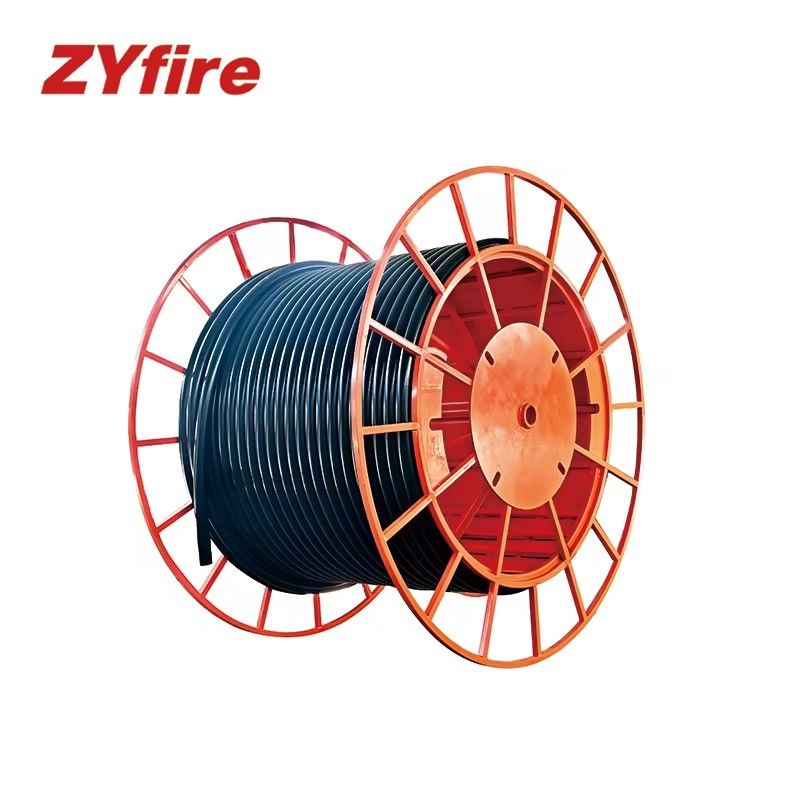
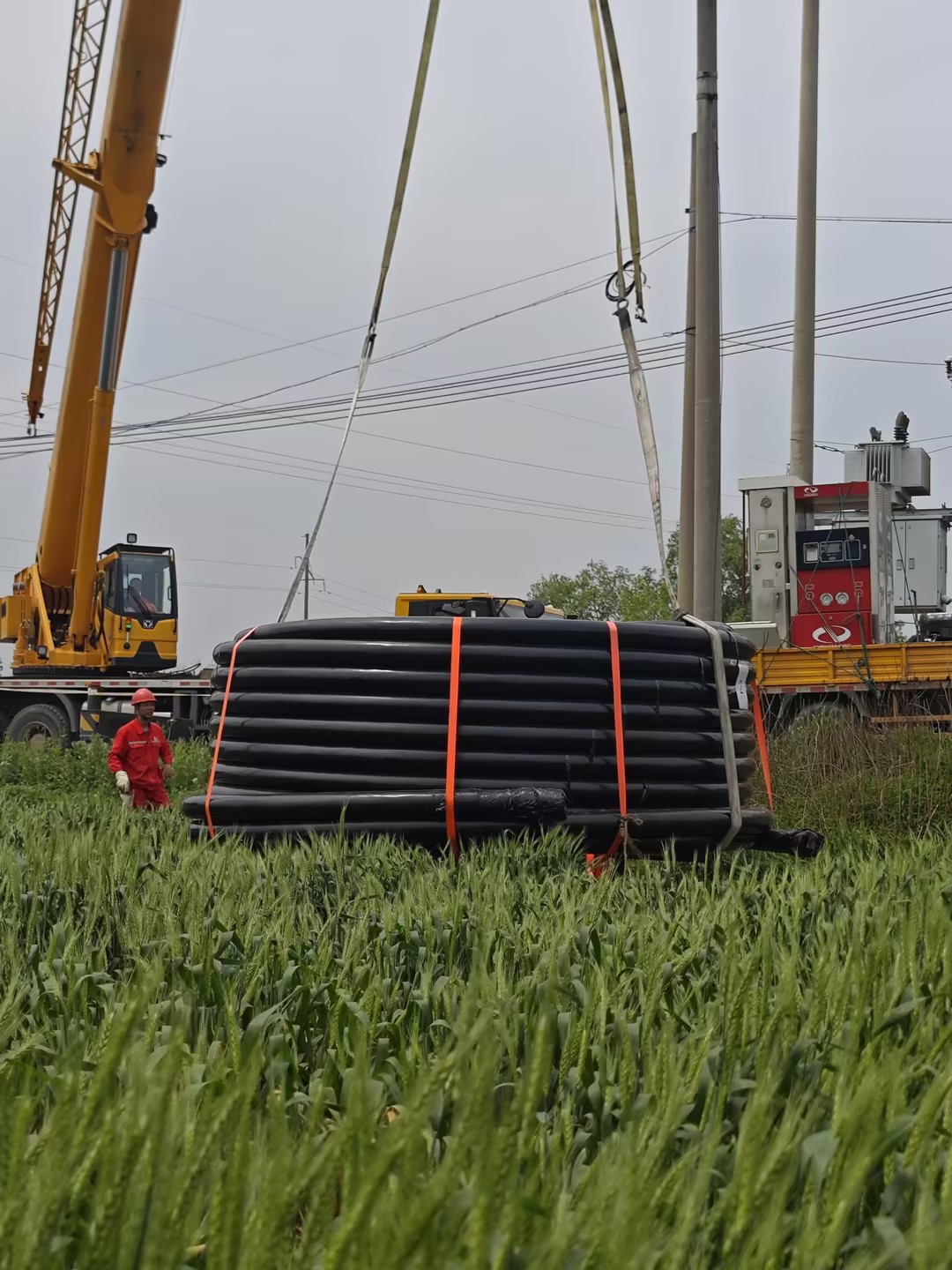
The highest-ranked configuration in this selection is not a single material choice but a fully engineered build. Product ID 3533 is a 2-inch RTP/TCP with a nominal pressure of 3500 PSI and an outside diameter of 79.8 mm, supplied on a reel of 3700 × 1200 mm with a single length of 920 m per coil, a reel weight of 1200 kg and a full plate weight of 5524 kg. It uses HDPE or PE-RT for the inner and outer layers and accepts polyester filament, aramid fiber tape, glass fiber tape or steel wire tape as the reinforcement layer.
Engineering rationale: the defining feature is the combination of pressure and length. The product is designed for high-pressure fluid transmission in mining and oil and gas sectors operating in continuous 24/7 mode, and the 920 m single length per coil reduces the number of fittings required across a long pipe run. It meets the special requirements recorded for this service class — corrosion resistance, explosion-proof construction, high-pressure tolerance up to 3500 PSI, and API compliance.
Customization available: this configuration is offered under an OEM/ODM production model with customization across size and diameter, working pressure, weight, length and bending radius. That flexibility is what allows a single product family to be tuned to different projects rather than forcing the project to accept a catalogue standard.
Limits to check: 3500 PSI is a nominal pressure for this specified build; any deviation in bore, reinforcement type or design temperature requires a new qualified rating. Confirm reel and full-plate weights against site lifting and transport limits, and confirm bend radius for the route before the coil is wound.
Step-by-Step: Matching a Configuration to a Project
The six configurations above only become useful when they are tested against a defined set of project inputs. The following sequence is the order in which the variables actually constrain each other.
- Fix the operating pressure and design temperature. These two inputs eliminate configurations before any other consideration. A line specified near the top of its pressure range should not be resolved by a standard-duty reinforcement choice.
- Characterise the conveyed fluid. Corrosion resistance and no-swelling behaviour are liner properties. Decide whether HDPE or PE-RT is the correct inner layer for the medium, and record that decision as a specification, not a preference.
- Map the route geometry. Identify the tightest bend, the total run length and the number of direction changes. Bend radius is a customization lever, and the tighter the route, the more it influences the achievable coil length.
- Choose the reinforcement layer against the pressure demand. Work from polyester filament and glass fiber tape for standard and mid-range duty, and move to steel wire tape or aramid fiber tape where pressure and weight respectively become governing conditions.
- Set the lay length and reel logistics. The 920 m single length reduces fittings, but it also sets reel dimensions and handling weight. Match the coil format to what the site can lift, transport and lay.
- Confirm environmental exposure. Decide whether UV and antioxidant options are required for the outer layer, and specify them in writing if the line will sit exposed.
- Verify qualification and testing. Confirm the configuration is qualified under API Spec 15S, confirm that production is 100% tested, and confirm the certificate scope covers the bore and pressure you are ordering.
Use Cases: Where Each Configuration Fits
The configurations map to distinct operating situations rather than to a single "best" answer.
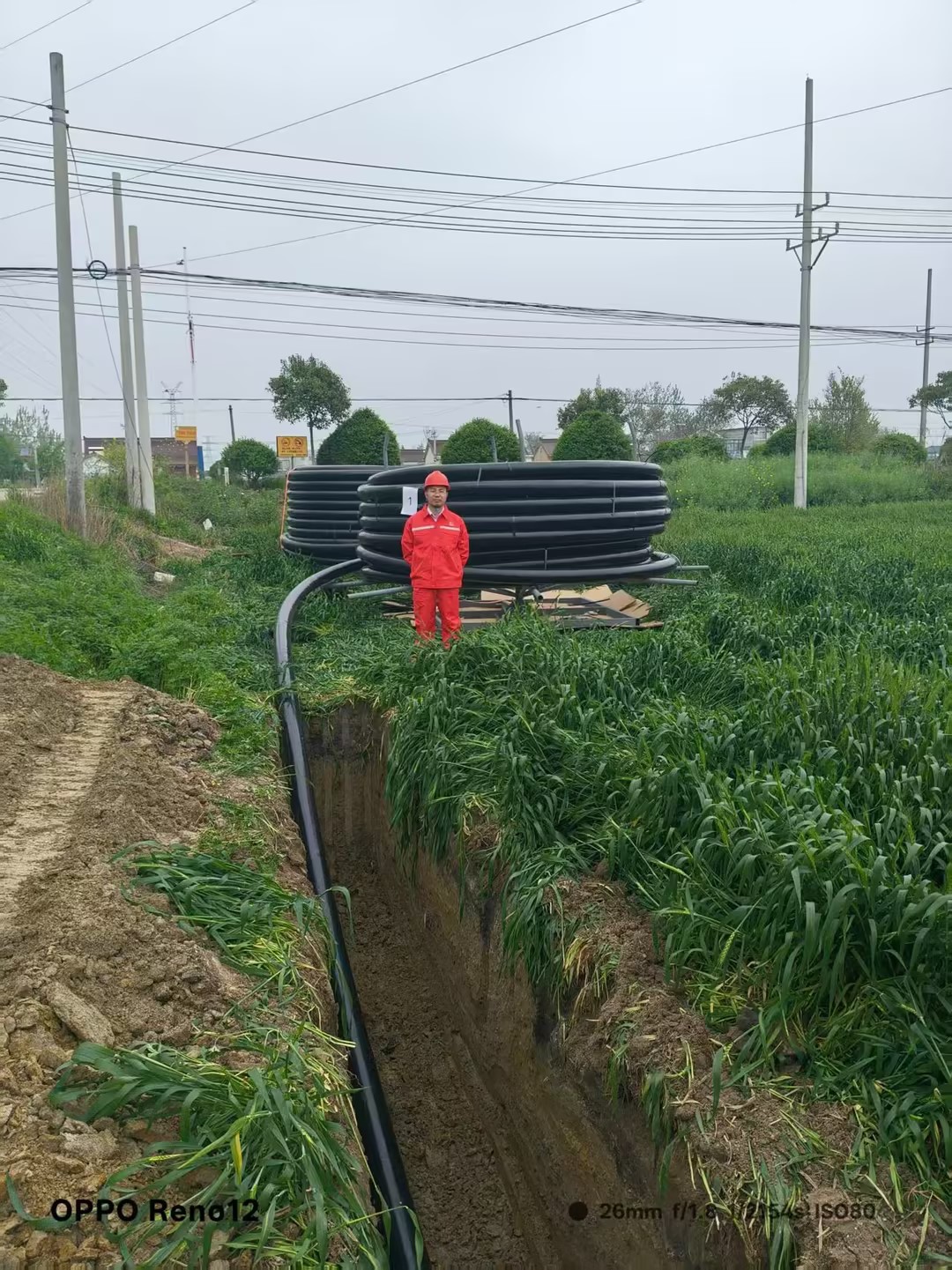
- Onshore oilfield flowlines at moderate pressure: polyester filament or glass fiber tape reinforcement with an HDPE liner covers the standard-duty case, where corrosion resistance and long unjointed runs matter more than the peak pressure number.
- High-pressure oilfield surface lines in continuous service: the 2-inch, 3500 PSI, 920 m configuration (product ID 3533) is designed for high-pressure fluid transmission operating in 24/7 mode, with the long coil length reducing fittings across the run.
- Weight-constrained and offshore deployments: aramid fiber tape reinforcement is the configuration to evaluate when handling weight and reel logistics are governing conditions, given that oil and gas accounts for approximately 71.2% of RTP demand (Fact.MR, 2025).
- Exposed desert and high-radiation surface routes: PE-RT lined builds with the UV / antioxidant outer-layer option address jacket degradation that a pressure rating does not describe.
- Mining and slurry-adjacent fluid transfer: the referenced RTP product is specified for both oil and gas and mining industries, with flexibility and long single-pipe lengths supporting installation in constrained underground and surface layouts.
Field evidence: an OEM/ODM programme recorded 120,000 meters of RTP delivered for fluid transmission service across a five-year duration, covering markets including the United Arab Emirates, Argentina, Australia, Bahrain, China, Iran, Jordan, South Korea, Libya, Oman, Saudi Arabia and the United States. The reported result was stable operation under high-pressure conditions, no leakage, and reduced maintenance costs, with corrosion resistance, long service life and ease of installation cited as the highlights.
Configuration Comparison Table
| Rank | Configuration | Reinforcement layer | Liner options | Primary selection driver | Customization levers | Verified reference point |
|---|---|---|---|---|---|---|
| 1 | Standard-duty surface line | Polyester filament tape | HDPE; PE-RT; UV & antioxidant optional | Corrosion resistance, flexibility, long single-pipe length, low fitting count | Size / diameter, working pressure, weight, length, bending radius | Reinforcement and material list, ZYfire RTP product data |
| 2 | Market-volume standard | Glass fiber tape | HDPE; PE-RT | Largest RTP product segment by share; stiffness on long runs | Size / diameter, working pressure, length | GFRTP ≈ 64.7% of RTP market share (Fact.MR, 2025) |
| 3 | Exposed-surface build | Any listed tape type | PE-RT inner and outer; UV / antioxidant optional | Outer-jacket resistance to sunlight and weathering | Additive selection, size, length | Material layer specification, ZYfire RTP product data |
| 4 | Upper-range pressure duty | Steel wire tape | HDPE; PE-RT | Hoop demand at the top of the project pressure range | Working pressure, diameter, bend radius | Reinforcement list, ZYfire RTP product data |
| 5 | Weight-constrained / offshore | Aramid fiber tape | HDPE; PE-RT | Handling weight and reel logistics alongside pressure | Weight, length, bend radius | Reinforcement list, ZYfire RTP product data |
| 6 | Custom high-pressure long-coil | Polyester filament, aramid fiber, glass fiber or steel wire tape | HDPE; PE-RT | 3500 PSI nominal, 24/7 high-pressure fluid transmission with minimum fittings | All levers: size / diameter, working pressure, weight, length, bending radius | Product ID 3533: 2", 3500 PSI, OD 79.8 mm, 920 m per coil |
Ranks 1–5 are qualified against the project's own pressure, temperature and route data; only Rank 6 carries a published nominal pressure in the referenced product data. RTP for oilfield service is qualified under API Spec 15S (2nd Edition, 2016), which covers spoolable reinforced plastic line pipe up to 6 inches in diameter.
FAQ
What certification should an oil and gas RTP configuration carry?
API Specification 15S (2nd Edition, 2016) provides the industry-standard requirements for the manufacture and qualification of spoolable reinforced plastic line pipe for oilfield applications, and it covers pipe diameters up to 6 inches. ZYfire Hose Corporation manufactures RTP certified under API 15S. Because the recorded service requirements for high-pressure RTP surface lines include corrosion resistance, explosion-proof construction, high-pressure tolerance and compliance with API standards, the certificate should be requested and its scope checked against the exact bore, pressure and service you are ordering. Certification confirms qualification to the standard; it does not automatically confirm fitness for a specific line, so the qualified rating for your bore and design temperature should be confirmed separately.
Can an RTP configuration be customized to my bore size, working pressure and bend radius?
Yes. ZYfire produces RTP under an OEM/ODM model with customization across size and diameter, working pressure, weight, length and bending radius. The referenced RTP build also accepts selection between polyester filament, aramid fiber tape, glass fiber tape and steel wire tape reinforcement, and between HDPE and PE-RT for the inner and outer layers, with UV and antioxidant additives available as options. Production quality control is 100% testing, and monthly capacity is 100,000 meters. As a concrete reference point, product ID 3533 is a 2-inch configuration at 3500 PSI nominal with a 79.8 mm outside diameter and a 920 m single length per coil.
What drives the cost of a high-pressure RTP configuration?
Cost in this category is driven by configuration, not by a single unit price. The main drivers are the reinforcement tape selected, the inner and outer layer material, the bore and working pressure, and the coil logistics — a longer single length per coil reduces the number of fittings and installation joints required across a run. Lifecycle cost is influenced by the same variables: a recorded OEM/ODM programme delivered 120,000 meters for fluid transmission over a five-year duration with stable high-pressure operation, no leakage, and reduced maintenance costs. Buyers evaluating budget should therefore compare configurations on total installed and maintained cost rather than on pipe price alone.
Can engineers validate a configuration before committing to a full order?
The minimum order quantity for this RTP range is 50 meters, which allows a configuration to be validated at a sample scale before a full programme is released. Because size, working pressure, weight, length and bending radius are all customizable, a sample can be produced to the intended project specification rather than to a generic standard. Production runs are 100% tested, and after-sales support includes on-site service and after-sales consultation. When validating, confirm the bend radius against the tightest turn on the route, and confirm the connection and fitting approach is qualified for the same pressure class as the pipe.
What lead time and production capacity should be planned?
Quoted lead time for this RTP range is 30 days, with a monthly capacity of 100,000 meters and a minimum order quantity of 50 meters. For larger or multi-site programmes, capacity should be assessed against the recorded delivery scale: an OEM/ODM programme supplied 120,000 meters of RTP for fluid transmission service over five years across markets including the United States, Saudi Arabia, the United Arab Emirates, Oman, Bahrain, Kuwait, Australia, Argentina, South Korea, Jordan, Libya and China. For a project-specific configuration, share the bore, working pressure, bend radius and required lay length before the lead time is confirmed, since customization of these parameters is part of the production plan.
Next step: if you are evaluating an RTP configuration for a specific surface line, ZYfire can review your bore, working pressure and bend radius requirements and respond with a matched configuration and sample plan. Download the product brochure at ZYfire RTP brochure, or visit www.zyfire.com to send your specification and request a quotation.
Conclusion: Choose the Configuration, Not the Category
The six configurations in this ranking share one architecture — an HDPE or PE-RT inner layer, a tape-wound reinforcement layer, and an HDPE or PE-RT outer layer with optional UV and antioxidant additives — and differ in which part of that architecture is tuned to the project. Ranking them from standard-duty polyester filament reinforcement through glass fiber, environment-stabilized PE-RT, steel wire and aramid builds to the custom 2-inch, 3500 PSI, 920 m high-pressure design gives engineers a decision sequence that begins with pressure and temperature, narrows through fluid chemistry and route geometry, and ends with reel logistics, exposure and qualification.
The most common selection error is not choosing the wrong material; it is choosing a configuration that was never qualified for the specific bore, pressure and service it will see. Whether the right answer is a standard-duty line or a custom high-pressure long-coil build, the configuration should be documented, tested and traceable to a qualified rating — and the supplier should be able to customize size, working pressure, length and bend radius rather than force the project to accept a catalogue standard.
Have Questions or Need More Details?
Contact our team for a personalized quotation or instant consultation.
Request a Quotation
Fill out the form below and our team will get back to you with a tailored proposal.
WhatsApp Direct Chat
Prefer to chat in real-time? Message us on WhatsApp for instant assistance & quick answers.
- Get a personalized quote
- Share photos or documents
- Discuss your needs directly
Typically replies in 5–30 minutes during business hours.