Scenario-Based RTP Selection: A Site-Level Decision Guide for Oilfield, Offshore, and Mining Engineers
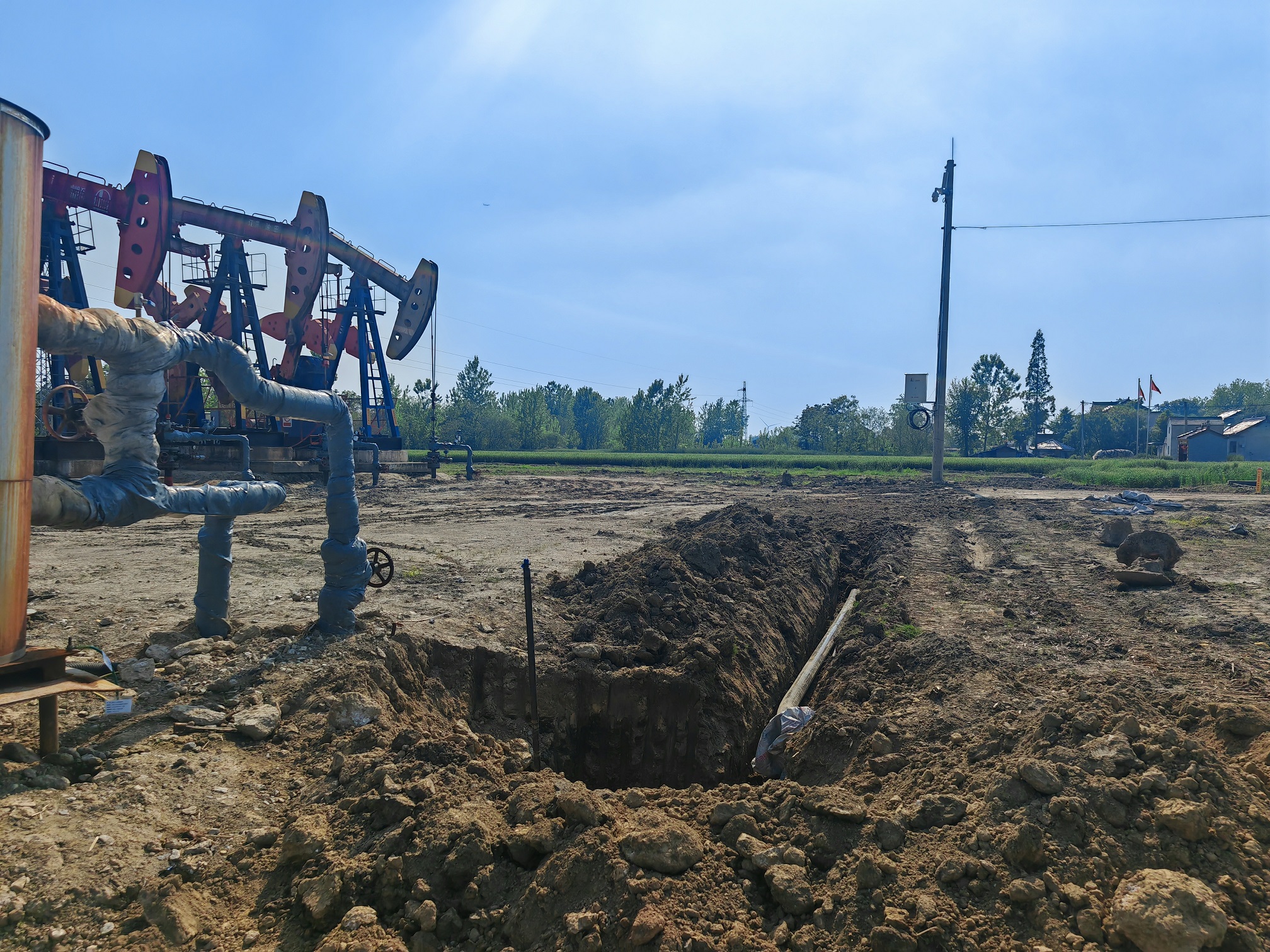
Choosing reinforced thermoplastic pipe (RTP) for a project is not about picking the strongest available specification. It is about matching pipe construction to the operating conditions of the site where the pipe will run. The same nominal pressure rating can behave differently in a desert oilfield, an offshore platform, or an underground mining service line.
This guide provides a scenario-based selection framework for RTP. It connects project-level operating conditions to the pipe variables engineers can specify: liner and cover polymer, reinforcement tape material, outside diameter, single-coil length, and connection strategy. The referenced product context is the ZYfire Hose Corporation RTP/TCP family, an API 15S-certified line produced for oil and gas and mining applications.
Why Project-Level RTP Matching Matters
The field performance of an RTP system depends on the match between pipe construction and actual site conditions. Common mismatches include selecting a pressure class from a pump nameplate without verifying surge pressures, choosing a reinforcement material that does not fit the installation geometry, or planning a pipeline with many short sections that increase the number of potential leak paths.
In oilfield, offshore, and mining environments, these mismatches usually appear as higher maintenance costs, slower installation, or repeated downtime. RTP is designed to deliver a long service life, but that performance is conditional on the pipe being specified for the scenario, not for a generic pressure rating.
RTP Market Context and Standards Framework
The global RTP market was valued at approximately USD 7.2 billion in 2024 and is projected to reach USD 10.2 billion by 2030, at a CAGR of 5.9%, according to Strategic Market Research. The oil and gas industry is the dominant end-user, representing about 71.2% of demand in Fact.MR's 2025 assessment. Asia Pacific is currently the largest and fastest-growing regional market for thermoplastic pipes.
Within the product mix, glass fiber-reinforced thermoplastic pipes (GFRTP) account for the majority share, estimated at 64.7% of the market according to Fact.MR. This makes glass fiber a common default, but the reinforcement choice still needs to be validated against each project's mechanical and safety requirements.
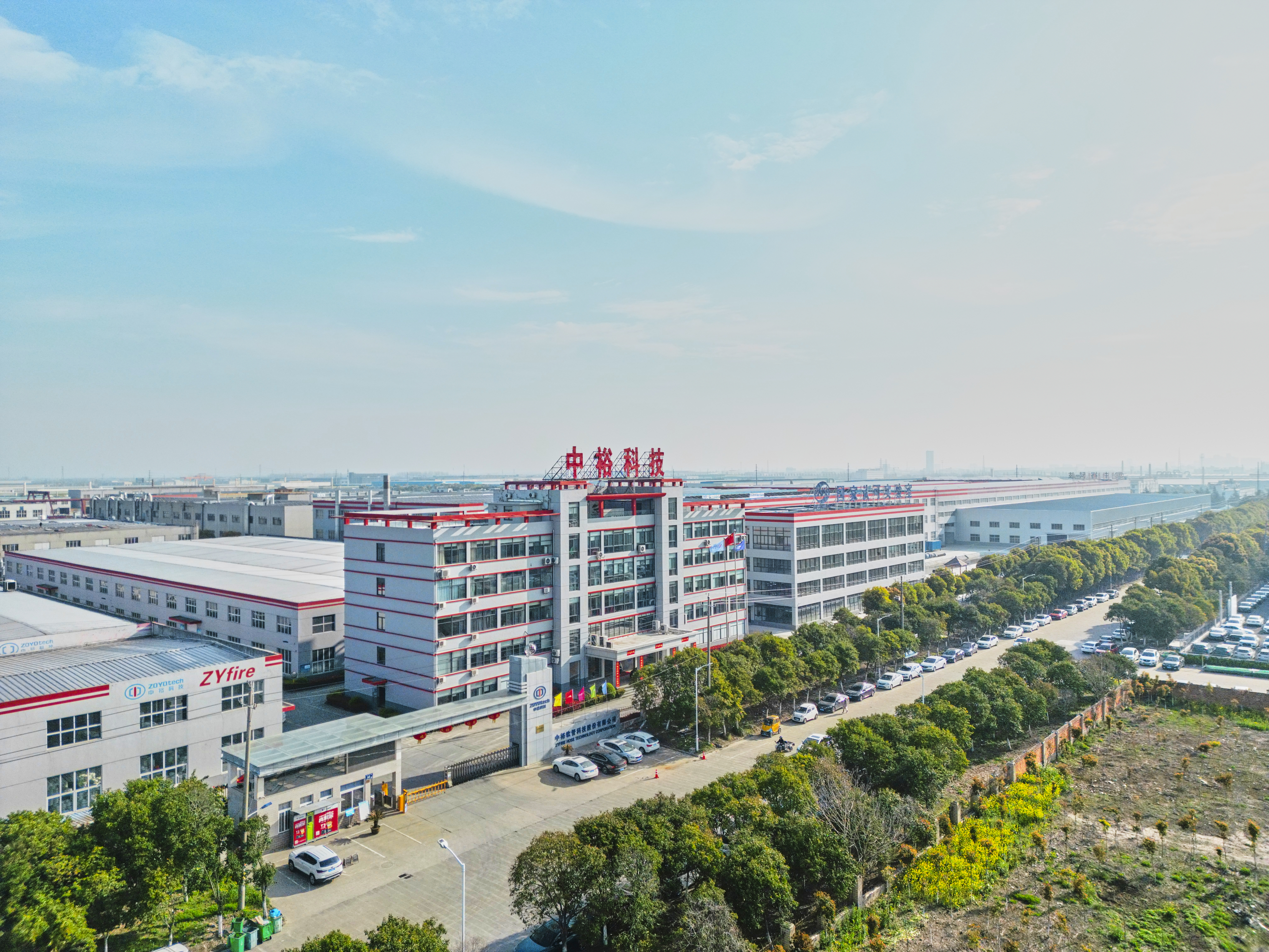
On the standards side, API Specification 15S (2nd Edition, 2016) sets the manufacturing and qualification requirements for spoolable reinforced plastic line pipe for oilfield applications, covering pipe diameters up to 6 inches. ZYfire Hose Corporation, a Beijing Stock Exchange-listed manufacturer founded in 2000, supplies RTP certified under API 15S and specializes in custom bore sizes for oilfield and mining service.
Configurable RTP Construction for High-Pressure Oil and Gas and Mining Service
ZYfire's RTP/TCP product line provides a configurable construction for these project scenarios. A standard reference configuration is the 2-inch 3500 PSI pipe with an outside diameter of 79.8 mm:
- Nominal pressure: 3500 PSI
- Outside diameter: 79.8 mm
- Single coil length: 920 m
- Reel specification: 3700 x 1200 mm
- Reel weight: 1200 kg
- Full plate weight: 5524 kg
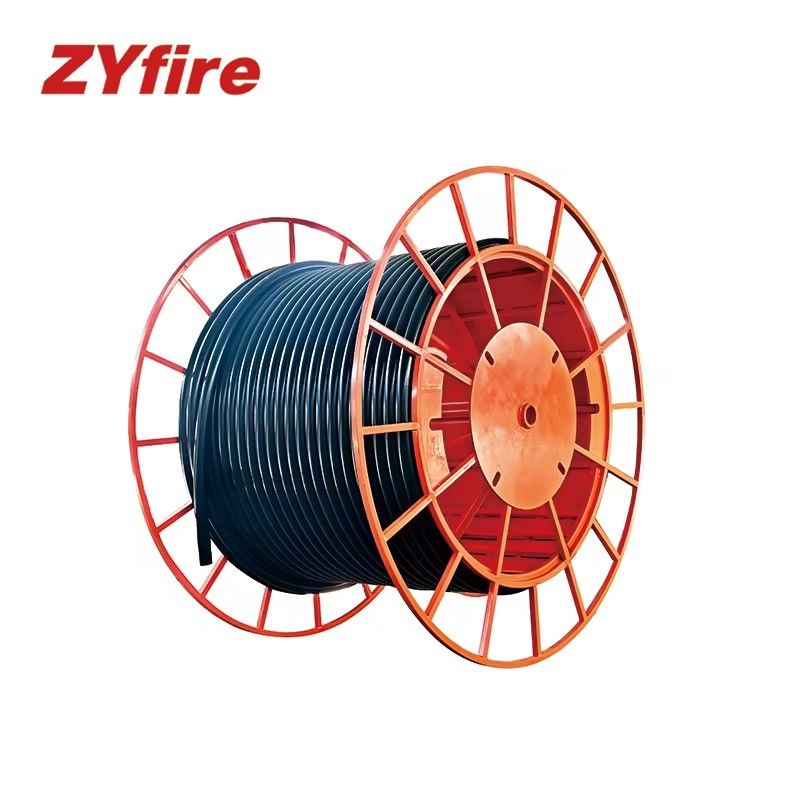
The outer and inner layers are made from HDPE or PE-RT, with optional UV and antioxidant stabilization for exposed installations. The reinforcement layer is selected from four material families: polyester filament, aramid fiber tape, glass fiber tape, or steel wire tape. In operation, the pipe is designed for 24/7 fluid transmission under high pressure, corrosion-resistant, and explosion-proof conditions, with compliance to API standards. The working-condition profile includes no swelling, good flexibility, long single length, fewer required fittings, simple installation, and a long cycle life.
For project-specific adaptation, ZYfire provides OEM/ODM customization of bore size, diameter, working pressure, weight, length, and bending radius. Monthly production capacity is 100,000 meters, lead time is 30 days, and the minimum order quantity is 50 meters. Every pipe is 100% tested before delivery.
Seven-Step Scenario Matching Process
Step 1: Classify the fluid and its corrosion behavior
The transported fluid controls the liner selection. HDPE and PE-RT liners cover water, brine, produced water, and many slurry services. If the fluid chemistry reaches beyond that envelope, the reinforcement and liner combination must be reviewed for permeation, swelling, and chemical resistance. RTP's no-swelling behavior is an advantage in this step.
Step 2: Verify the pressure envelope, not just the nominal rating
A pump rated at 3500 PSI is a useful starting point. The specification should also confirm whether the line will experience surge, water hammer, or repeating cyclic loads from 24/7 operation. Reinforcement materials can respond differently under these conditions, so the pipe construction should hold the rating with an appropriate margin.
Step 3: Review the route geometry and bending constraints
The pipe route imposes mechanical demands on the RTP system. Where the layout requires compact bends or where the pipe passes through confined spaces, reinforcement and core design influence flexibility. On long straight runs, a 920 m single-coil length reduces the number of fittings required.
Step 4: Assess abrasive media and solid content
Mining and slurry transfer applications add abrasion as a core risk, especially near elbows and pump discharge. The pipeline should use a layout that limits directional changes, and the liner must handle continuous contact with particulates. This is the point in the procurement process where the pipe construction should be reviewed against the actual slurry characteristics.
Step 5: Align the connection strategy with installation and maintenance capability
Connection methods should match the project's installation crew and maintenance plan. Reducing the number of connections through longer RTP coils lowers potential leak paths and shortens installation time, which is especially valuable in remote or offshore locations.
Step 6: Confirm explosion-proof and statutory compliance
For underground mines and oilfields with explosive atmospheres, the pipe specification should confirm explosion-proof construction and adherence to applicable standards. API compliance should also be verified against the project's procurement requirements.
Step 7: Validate supplier testing and delivery evidence
Project teams should verify that the supplier can provide test evidence for the exact specification. In ZYfire's manufacturing process, the laboratory has passed the professional accreditation of the China National Accreditation Service for Conformity Assessment (CNAS), and all RTP lines are 100% tested before shipment.
Long-Run Project Evidence: High-Pressure Fluid Transmission
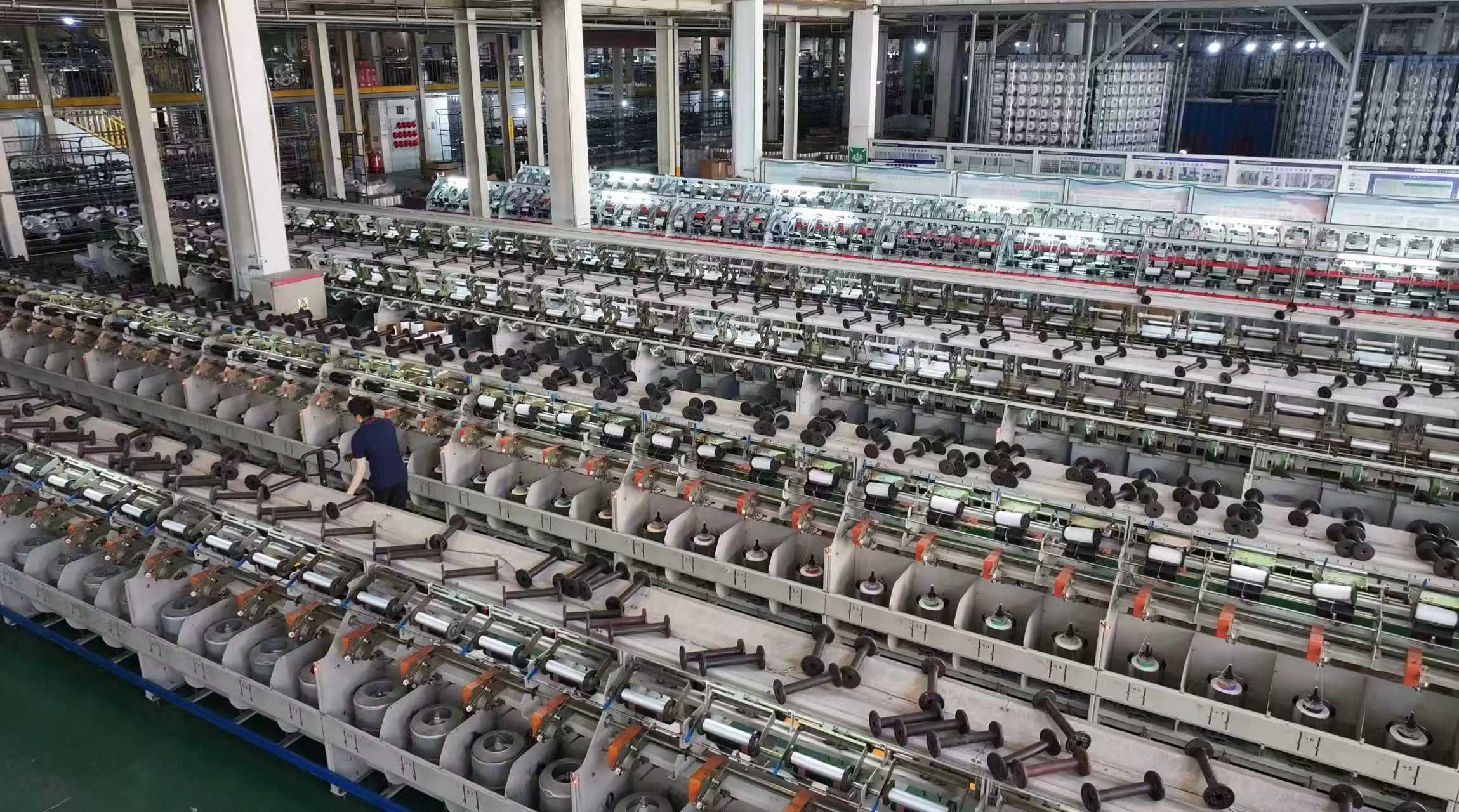
A documented project record covers 120,000 meters of RTP delivered for fluid transmission to OEM/ODM clients in the United Arab Emirates, Argentina, Australia, Bahrain, China, Iran, Jordan, South Korea, Libya, Oman, Saudi Arabia, and the United States. Over a 5-year period, the line has operated under high-pressure conditions with stable operation, no leakage, and reduced maintenance costs. The observed highlights are corrosion resistance, long service life, and easy installation.
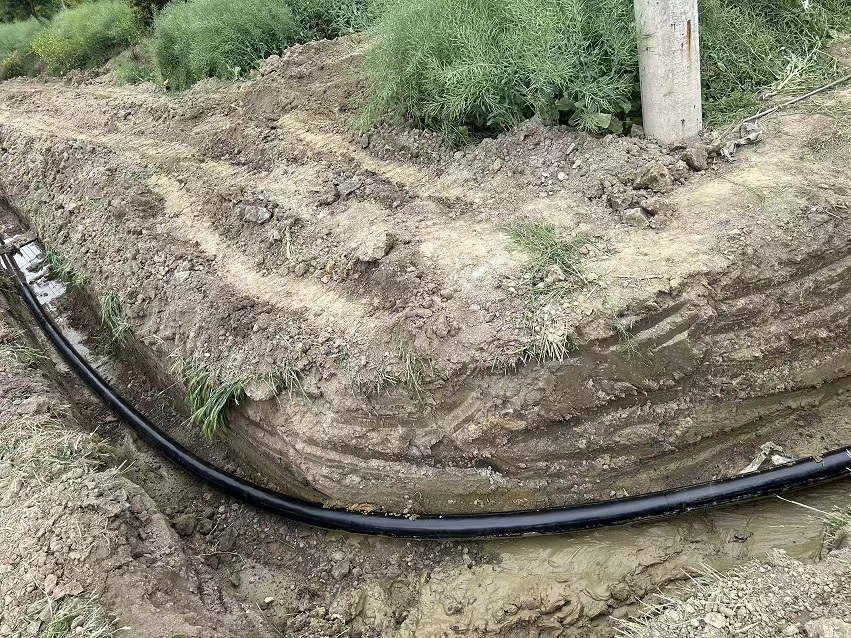
Scenario-Priority Comparison Table
The table below shows how project scenarios influence RTP selection priorities. Actual specifications should always be verified with the supplier against project calculations, including pressure, fluid, temperature, and layout data.
| Project scenario | Key operating risks | Priority RTP attributes | Pipeline layout impact |
|---|---|---|---|
| Onshore oilfield water or gathering lines | Brine corrosion, pressure cycles | High-pressure rating up to 3500 PSI; corrosion-resistant HDPE or PE-RT liner; no swelling | Long single runs reduce fittings; fast installation; low leak-path count |
| Offshore oil and gas transfer | Seawater corrosion, 24/7 duty, installation cost | Corrosion-resistant construction; API-compliant; long coil length | Fewer subsea joints; less installation time; easier handling |
| Underground mining service | Explosion risk, confined space, impact | Explosion-proof design; flexibility for tight bends | Shorter pull sections if needed; careful route planning; reinforcement matched to bend radius |
| Mining slurry transfer | Abrasion, solids contact, chemical wear | Liner suited to abrasive media; limited direction changes | Minimize elbows; monitor discharge zones; design for inspection |
| Remote tie-in or transfer lines | Logistics, UV exposure, installation budget | Optional UV and antioxidant stabilization; long single lengths | Shallow burial or surface lay; fewer on-site joints; lower labor cost |
FAQ
What does API 15S mean for project-level RTP selection?
API Specification 15S (2nd Edition, 2016) provides the industry-standard requirements for the manufacture and qualification of spoolable reinforced plastic line pipe for oilfield applications, covering pipe diameters up to 6 inches. It gives project teams a baseline for design, manufacturing, and testing. ZYfire manufactures RTP according to API 15S and performs 100% testing on all lines before shipment.
Which RTP reinforcement material suits high-pressure oilfield or offshore service?
ZYfire RTP/TCP can be reinforced with polyester filament, aramid fiber tape, glass fiber tape, or steel wire tape. The exact choice depends on working pressure, cyclic loading, required bending radius, and installation space. A standard high-pressure starting point is the 2-inch 3500 PSI configuration with an outside diameter of 79.8 mm. Because every project differs, ZYfire also offers OEM/ODM customization of size, diameter, working pressure, weight, length, and bending radius, with a monthly capacity of 100,000 meters, a 30-day lead time, and a 50-meter minimum order quantity.
How does long single-coil RTP affect total pipeline cost?
A 920 m RTP coil reduces the number of fittings needed for long pipe runs. Each fitting is a potential leak path and adds labor and logistics cost. Fewer fittings have a direct project budget impact, and this benefit grows as line length or site difficulty increases. Corrosion resistance and continuous 24/7 operation also support lower lifecycle maintenance costs in oilfield and mining service.
Can we order a small custom RTP sample for field testing before finalizing the project spec?
Yes. The minimum order quantity is 50 meters, so a pilot coil or test section can be supplied before full production. This allows the project team to verify pressure handling, fluid compatibility, handling, and connection procedures against the detailed design. Every order, including small pilot coils, is 100% tested before shipment.
What lead time should we expect for custom RTP for a mining or oilfield project?
The standard lead time for custom RTP configurations is 30 days, supported by a monthly production capacity of 100,000 meters. Early specification of bore size, pressure rating, coil length, and connection type helps keep the project on schedule. Pre-delivery testing is included in the timeline, so the delivered pipe is ready for installation.
Conclusion
Scenario-based RTP selection starts with the project site, not with a generic pressure rating. When liner polymer, reinforcement layer, pressure class, single-coil length, and connection strategy are matched to the operating conditions, the result is a reliable, long-life pipeline with low maintenance demand.
For engineers and procurement teams planning oilfield, offshore, or mining RTP installations, the next step is to compare site conditions against a specific pipe configuration.
Download the ZYfire RTP brochure to review the product range and manufacturing capability, or contact the ZYfire engineering team for application support.
Have Questions or Need More Details?
Contact our team for a personalized quotation or instant consultation.
Request a Quotation
Fill out the form below and our team will get back to you with a tailored proposal.
WhatsApp Direct Chat
Prefer to chat in real-time? Message us on WhatsApp for instant assistance & quick answers.
- Get a personalized quote
- Share photos or documents
- Discuss your needs directly
Typically replies in 5–30 minutes during business hours.