RTP Export Compliance: Navigating Standards and Regional Requirements for the Middle East, USA, and Southeast Asia
Decision-stage compliance guide for oil & gas and mining buyers | ZYfire Hose Corporation
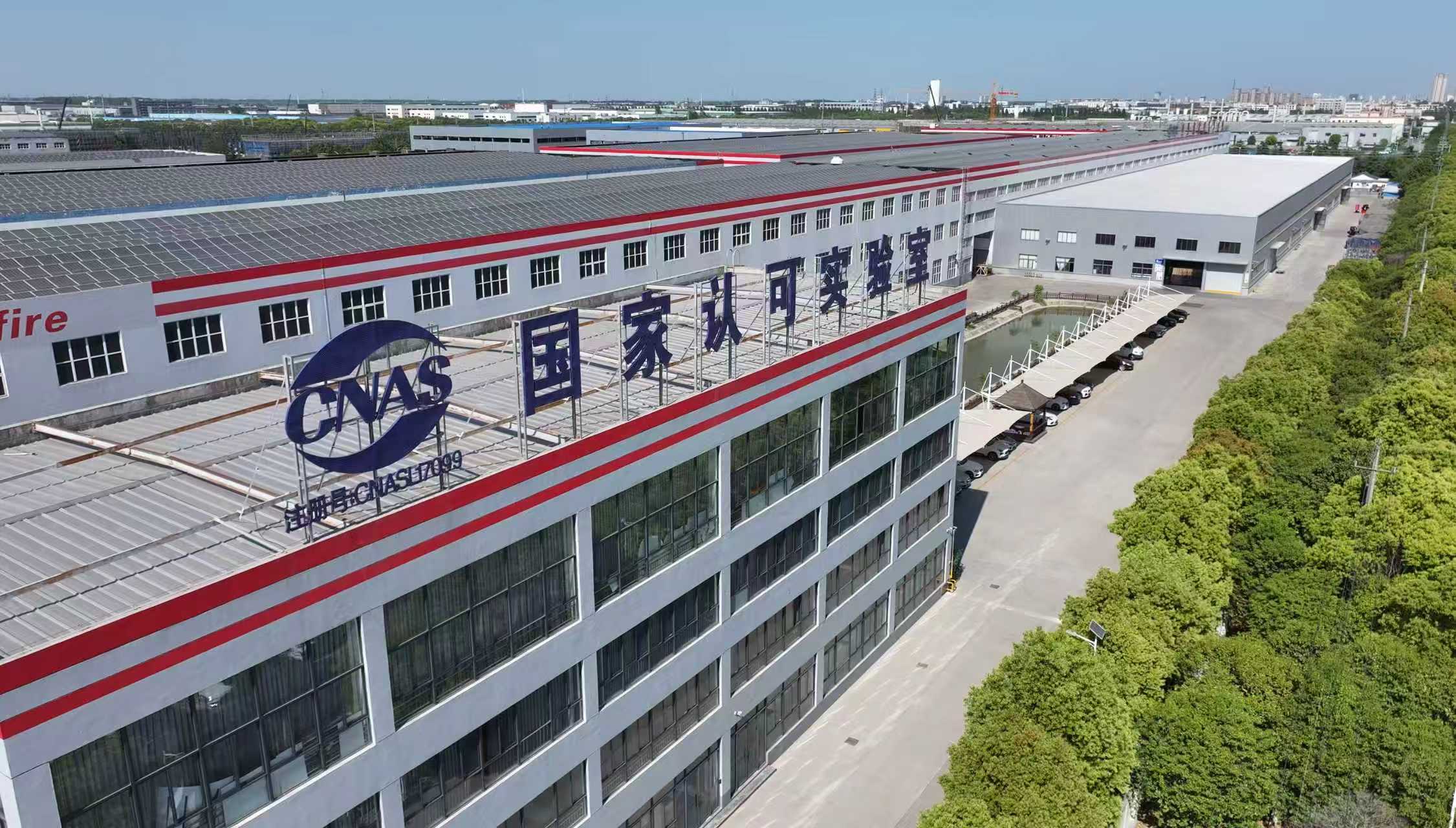
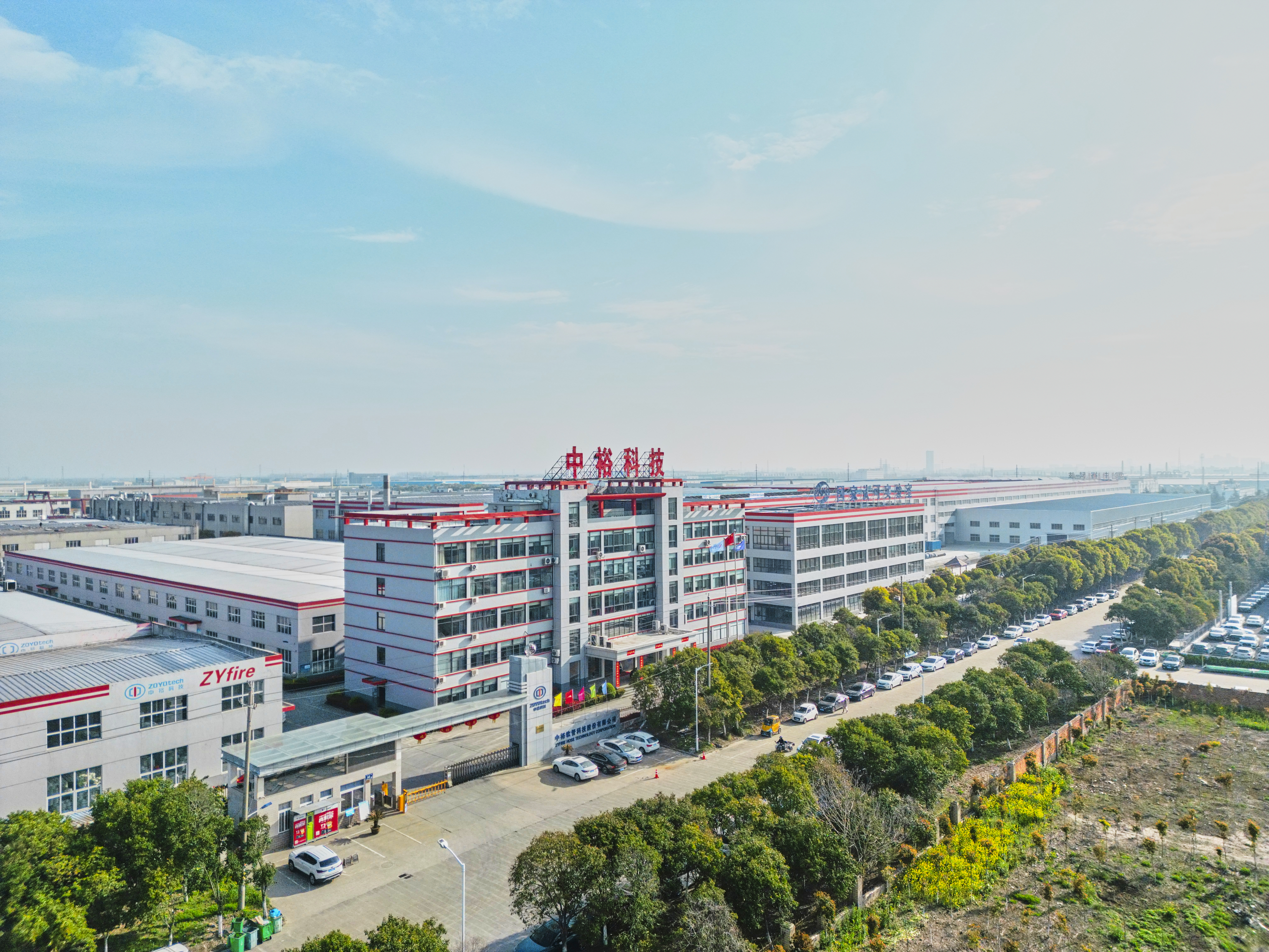
Production base within ZYfire's global manufacturing footprint — part of the delivery-side evidence examined in export orders.
Exporting reinforced thermoplastic pipe (RTP) into the Middle East, the United States, or Southeast Asia is a compliance decision before it is a commercial one. Projects rarely stall on price. They stall when a buyer cannot line up three things: the standard the pipe is qualified to, the accreditation behind the manufacturer's test data, and the documentation package the destination market expects to review.
For oilfield service, RTP is normally qualified against API Specification 15S — the American Petroleum Institute standard covering the manufacture and qualification of spoolable reinforced plastic line pipe, 2nd Edition (2016), which applies to pipe diameters up to 6 inches. Around that qualification sit two supporting layers: an accredited testing laboratory, and a supply footprint that matches the region receiving the pipe. ZYfire Hose Corporation, a Beijing Stock Exchange-listed manufacturer founded in 2000, produces API 15S-certified RTP specializing in custom bore sizes and high-pressure applications for oilfields and mining, and its laboratory has passed the accreditation of the China National Accreditation Service for Conformity Assessment (CNAS) — the first nationally recognized laboratory in its industry subdivision.
This guide works through that decision in the order buyers actually make it: the compliance problem, the market context behind rising documentation requirements, the evidence a supplier must be able to produce, a step-by-step verification workflow, the applications where review pressure is highest, and the performance comparison that decides the award once compliance is settled.
The Compliance Problem: Three Gaps That Delay RTP Awards
Compliance reviews for fluid-carrying industrial pipe slow down for predictable reasons. Across export scenarios involving the Middle East, the USA, and Southeast Asia, the same three gaps appear repeatedly.
Gap 1 — The qualification standard is assumed, not verified
RTP is often evaluated against documents already in the file from a previous steel or HDPE purchase. That is a mismatch. Steel pipe and HDPE pipe are qualified under their own systems; spoolable reinforced plastic line pipe for oilfield service is qualified under API Spec 15S, which also sets a scope boundary — pipe diameters up to 6 inches. A buyer who does not check that boundary can specify a bore the standard does not cover and discover the gap during inspection rather than during evaluation.
Gap 2 — Test claims without accreditation are not decision-grade evidence
“Tested” is a word, not evidence. Manufacturing claims become reviewable when they originate from a laboratory with formal accreditation and internationally recognized testing capability. For compliance-heavy orders — offshore, high-pressure, or operator-specified projects — the distance between an internal report and an accredited laboratory result is frequently the distance between approval and another review cycle.
Gap 3 — Regional emphasis differs; the underlying engineering evidence does not
Markets differ in what they ask to see. Middle East and Gulf projects commonly place weight on conformity documentation and material traceability. US projects frequently anchor on API 15S qualification and third-party inspection. Southeast Asian projects — part of the fastest-growing and largest regional market for thermoplastic pipes in 2024/2025, according to Mordor Intelligence and Market Research Future — often combine rapid-deployment requirements with documentation that must satisfy both the operator and the local channel partner. What does not change is the engineering evidence underneath: the qualification, the test data, and the traceability behind both. RTP is also supplied in different liner grades, reinforcement types, and connection formats, and each variation changes what a reviewer needs to see, which is why the specification should be fixed before documentation is requested.
One risk sits inside almost every RTP compliance file: corrosion. The pattern that resolves it is a control method paired with verification — selecting corrosion-resistant materials for the conveyed fluid and operating environment, and confirming that selection through a simulation test performed by the manufacturer. A corrosion-resistance statement without the paired test record is a claim; the pairing is an answer.
Industry Background: A Larger Market Under Greater Scrutiny
RTP adoption is rising, and so is the volume of documentation travelling with it. The global reinforced thermoplastic pipe market is estimated at USD 7.2 billion in 2024 and projected to reach USD 10.2 billion by 2030, growing at a CAGR of 5.9%, according to Strategic Market Research.
Demand is concentrated. Oil and gas is the dominant end-user segment, accounting for approximately 71.2% of total RTP demand as operators seek corrosion-free alternatives to steel, per Fact.MR. Product mix is concentrated as well: glass fiber reinforced thermoplastic pipes represent an estimated 64.7% of the total RTP product market (Fact.MR). That last figure carries a practical warning — a buyer specifying a different reinforcement or liner construction should not assume that most published category data describes the pipe they intend to purchase.
Market sizing itself deserves a caution. Published estimates diverge by scope: broad thermoplastic pipe figures, spoolable RTP figures, and reinforced thermoplastic pipe liner figures sit at different values depending on the source and on what the scope includes. Buyers building an internal business case should confirm what a number covers before citing it.
The supply side is global and competitive. The RTP and composite pipe sector includes companies such as National Oilwell Varco (NOV), Baker Hughes, Shawcor (Flexpipe), and Soluforce (Pipelife), alongside manufacturers that combine RTP production with broader polymer-hose manufacturing, including ZYfire. The consequence for buyers is straightforward: as availability broadens, differentiation shifts from “who can supply” to “who can prove compliance.”
The Solution: What a Compliance-Ready RTP Supply Chain Looks Like
A supplier supporting export orders across three regions needs four elements present at the same time. Missing any one of them moves the risk back onto the buyer.
1. Product qualification with a defined scope. API 15S-certified RTP establishes that the pipe is manufactured and qualified to the industry standard for spoolable reinforced plastic line pipe in oilfield applications. ZYfire produces API 15S-certified RTP specializing in custom bore sizes and high-pressure configurations for oilfield and mining service — so the qualification discussion and the customization discussion happen against the same technical framework instead of running in parallel.
2. An accredited laboratory. ZYfire's laboratory has passed CNAS professional accreditation and holds nationally and internationally recognized testing capabilities; it is the first nationally recognized laboratory in the subdivision industry. This is the layer that allows a compliance file to survive external review, because results trace back to an accredited facility rather than to an internal report.
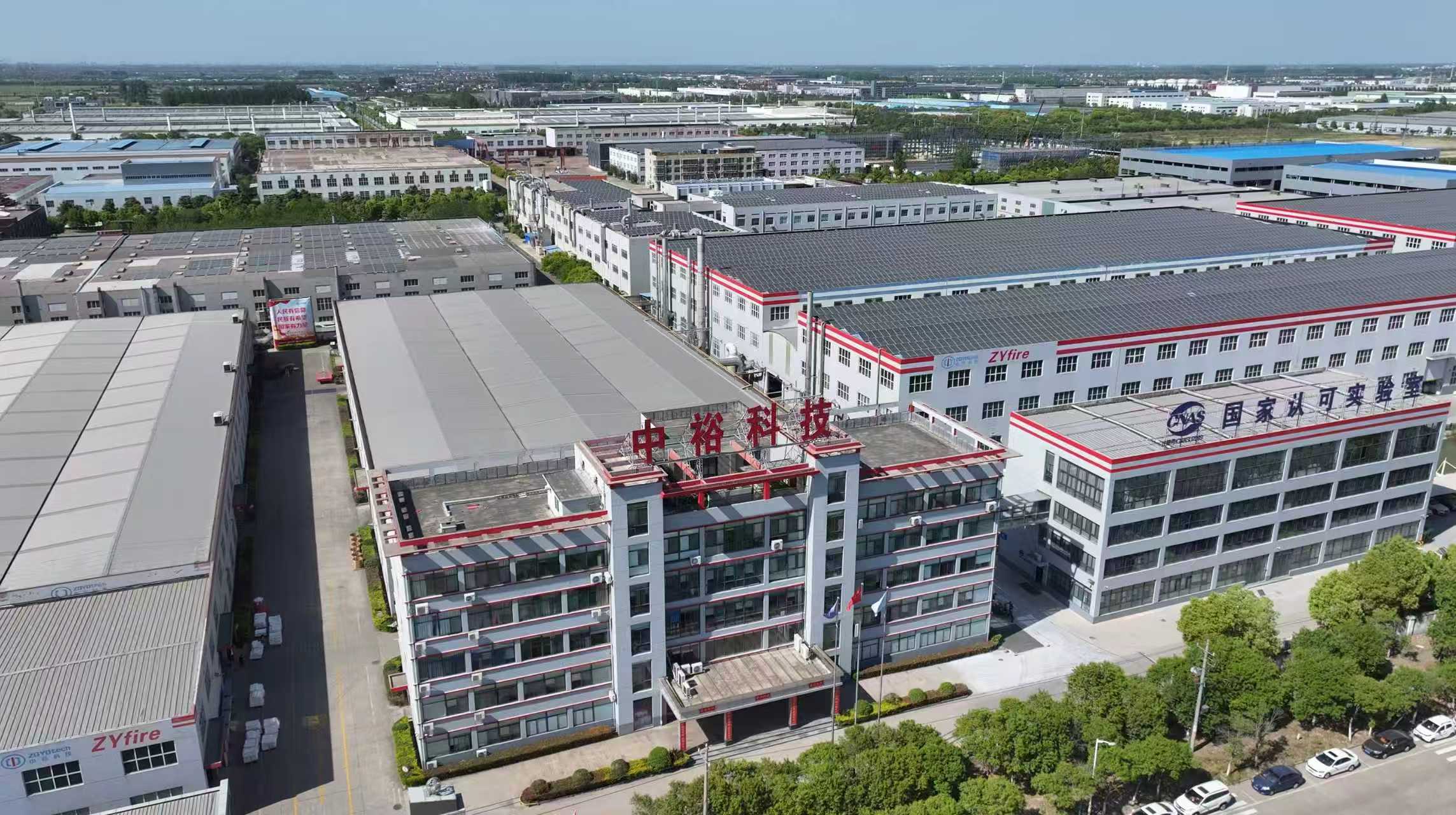
Manufacturing base — the first verification layer behind API 15S-certified RTP production.
3. Risk control with evidence attached. For fluid-carrying pipe, the dominant review risk is corrosion. The control method is material selection — specifying corrosion-resistant materials for the fluid and the operating environment — and ZYfire applies simulation testing to verify that selection. The corrosion claim therefore arrives with its own verification step attached rather than standing alone.
4. A supply footprint matched to the destination region. ZYfire operates global production bases, research and development centers, and logistics warehouses located in the United States, Saudi Arabia, the United Arab Emirates, Malaysia, and China (Nanjing Jiangsu, Taizhou Jiangsu, and Chuzhou Anhui). Hoses and pipes are exported to more than 70 countries and regions including Europe, the United States, and the Middle East, with exports accounting for 80% of output. For compliance-heavy orders, a regional base is not only a logistics convenience — it is a support layer able to respond to documentation, inspection, and spares requests in the project's own time zone.
Step-by-Step: Six Verification Steps Before You Sign
The sequence below keeps an RTP export order on schedule. Each step produces something the next step depends on.
Step 1 — Fix the service condition before the supplier conversation. Fluid type, pressure class, temperature range, and installation method determine which construction and which qualification are relevant. A specification that drifts during evaluation forces the compliance package to be rebuilt from the start.
Step 2 — Check the standard's scope against your bore requirement. API Spec 15S (2nd Edition, 2016) covers spoolable reinforced plastic line pipe for oilfield applications with diameters up to 6 inches. If the project design exceeds that range, resolve the question during evaluation rather than at inspection.
Step 3 — Audit the laboratory, not just the certificate. Ask which facility produced the test data and what accreditation it holds. CNAS accreditation indicates nationally and internationally recognized testing capability — the criterion that makes results portable into an operator's approval process.
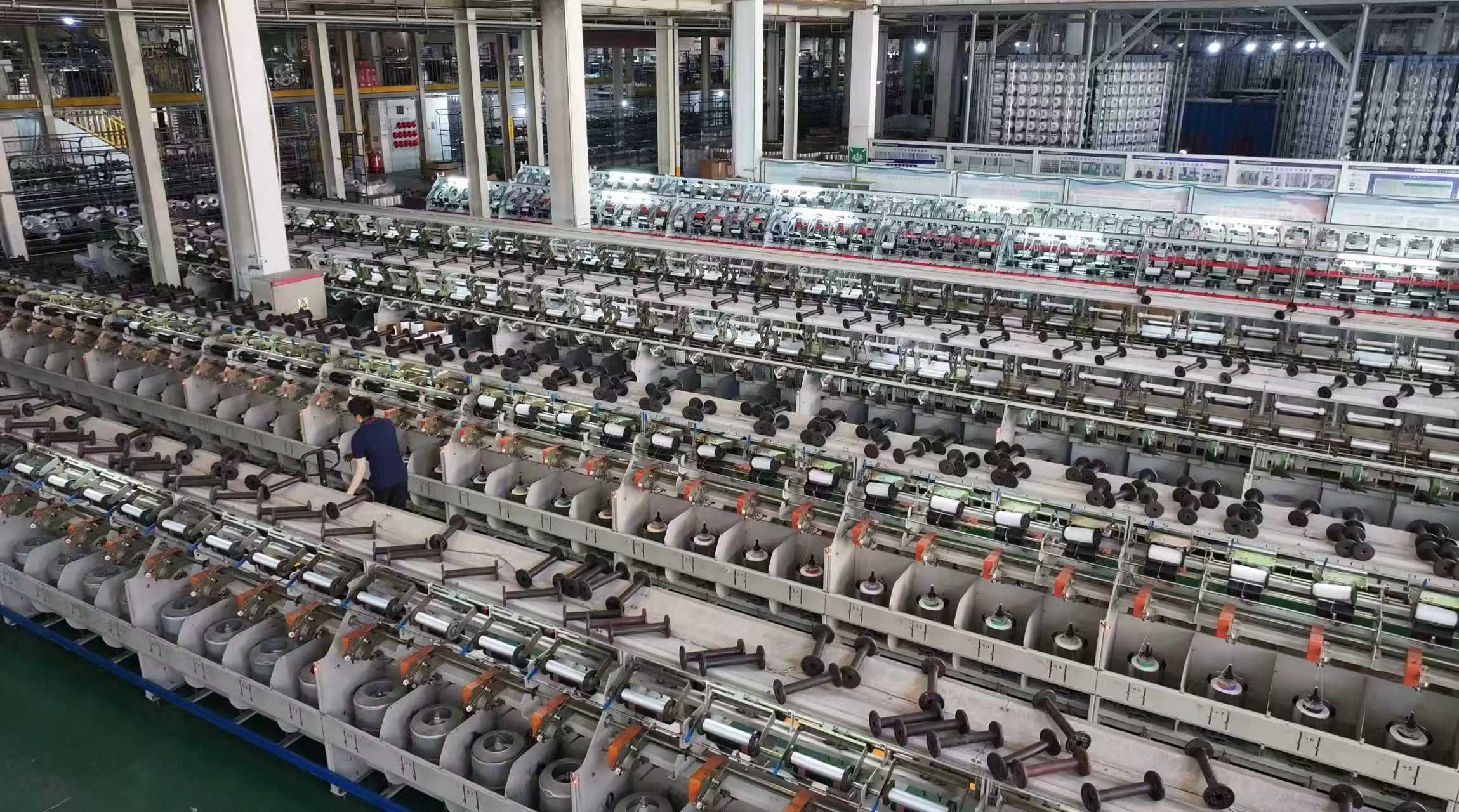
Production equipment in the RTP manufacturing chain — quality control starts at the machine, not at the final inspection.
Step 4 — Assemble the documentation package for the destination market. Middle East, US, and Southeast Asian projects emphasize different parts of the file, but a complete package typically addresses product conformity, material and batch traceability, test records, inspection documentation, and shipping and origin documents. Confirm the required set in writing with the end user's compliance or QA contact — not only with a trading intermediary.
Step 5 — Match the order to a production base. Confirm which production site will manufacture the order and which R&D or warehouse location supports it. With bases in the United States, Saudi Arabia, the UAE, Malaysia, and China, the answer changes inspection scheduling, spares planning, and how quickly a technical query is answered.
Step 6 — Re-verify the performance assumptions used to justify the award. Installation rate, maintenance profile, and relative cost should come from documented, comparable figures rather than from the category name. The next two sections show what those figures look like for RTP against steel pipe.
Use Cases: Where Compliance Review Is Most Demanding
Onshore oilfield flow and gathering lines
Onshore oilfield RTP lines are evaluated on corrosion resistance, pressure rating, and how quickly a field can be brought online. Corrosion discipline matters most: the control method (corrosion-resistant material selection) and its verification (simulation testing) are precisely what an operator's QA reviewer asks to see.
Offshore oil & gas RTP
Offshore Oil & Gas RTP projects combine weight, corrosion, and installation-window constraints. Compliance files for offshore work tend to be the most complete, because the cost of a documentation gap at a marine installation is high. Accredited laboratory evidence and a clearly scoped qualification carry the most weight here.
Mining slurry transfer RTP
Mining Slurry Transfer RTP faces abrasion as much as corrosion. Reviewers look for material selection matched to the abrasive medium, plus evidence that the selected construction has been tested against that service condition rather than against a generic benchmark.
Remote mining water and slurry lines
Remote sites add deployment speed to the requirement list. RTP installation reaches 10 km per day, compared with less than 2 km per day for steel pipe — a fivefold difference that matters when a site is weeks from the nearest fabrication yard. On compliance-heavy orders, rapid deployment and documentation completeness have to be solved together rather than sequentially.
High-pressure and custom-bore projects
High-pressure reinforced thermoplastic pipe and custom bore size RTP orders sit closest to the edge of standard scopes. These are the cases where a supplier's ability to hold the qualification and the customization conversation on the same footing determines how predictable the approval timeline will be.
Comparison Table: RTP vs Steel Pipe on Decision Metrics
Once compliance is satisfied, the award usually turns on measurable performance. The following comparison reflects documented figures for RTP and steel pipe in mining and oil and gas service.
| Decision metric | Reinforced Thermoplastic Pipe (RTP) | Steel pipe |
|---|---|---|
| Installation rate | 10 km per day | Less than 2 km per day |
| Relative cost | Approximately 20% lower | Baseline |
| Maintenance profile | Minimal; intervention only in case of force damage | Corrosion maintenance several times per year |
| Site handling and transport | Light weight, easy to operate, low site transport cost | Heavier handling and higher site transport cost |
| Dominant risk exposure | Force damage on site | Corrosion |
| Typical best fit | Mining and oil and gas fluid lines | Applications already built around steel infrastructure and maintenance routines |
Figures reflect ZYfire RTP product comparison data for mining and oil and gas service.
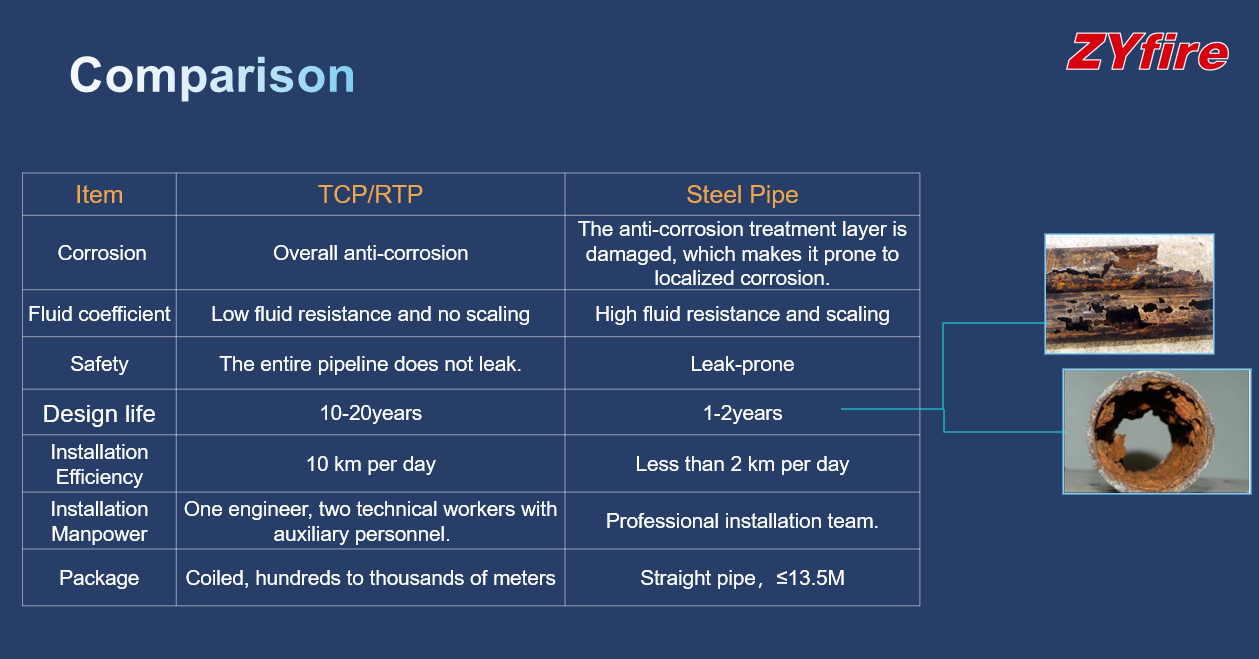
RTP and steel pipe side by side — the metrics that typically decide an award after compliance is cleared.
Compliance Evidence Map: What to Request in Writing
The table below converts the discussion above into a request list. Each row can be put directly into a technical clarification or pre-qualification document.
| Verification layer | What to request | Reference point |
|---|---|---|
| Product qualification | Qualification certificate and its scope, including diameter coverage | API Specification 15S, 2nd Edition (2016); diameters up to 6 inches |
| Testing capability | Which laboratory produced the data, and its accreditation status | ZYfire laboratory accredited by CNAS |
| Risk-control evidence | Material selection rationale plus the related test record | Corrosion-resistant material selection verified by simulation testing |
| Regional support | Producing site, R&D support, and nearest logistics warehouse | Production bases and warehouses in the United States, Saudi Arabia, the UAE, Malaysia, and China |
| Export track record | Markets served and export share | Exports to more than 70 countries and regions; export ratio of 80% |
FAQ: RTP Export Compliance and Sourcing Questions
Which certification should be verified first when sourcing RTP for oilfield use?
Start with the product qualification. API Specification 15S (2nd Edition, 2016) is the American Petroleum Institute standard for the manufacture and qualification of spoolable reinforced plastic line pipe for oilfield applications and covers pipe diameters up to 6 inches. Confirm that the qualification covers the configuration being purchased — construction, pressure class, and bore — and not only the product family name.
Can RTP be customized to match regional pressure and bore requirements?
Yes, within the qualified scope. ZYfire produces API 15S-certified RTP specializing in custom bore sizes and high-pressure applications for oilfields and mining. The important discipline is that customization is documented against the standard rather than agreed verbally, and that any requirement falling outside the standard's diameter coverage is raised during evaluation instead of after order placement.
How does RTP compare with steel pipe on cost and maintenance?
On documented figures, RTP is approximately 20% lower in cost than steel pipe, and its maintenance requirement is minimal — intervention is needed only in cases of force damage — whereas steel pipe requires corrosion maintenance several times a year. Over a project lifetime that difference shifts the budget conversation from purchase price to total cost of ownership, which is usually the point at which an award is finally decided.
Can buyers validate samples and test documentation before placing an order?
Yes, and compliance-heavy orders normally begin with documentation review rather than a purchase order. ZYfire's laboratory has passed CNAS professional accreditation with nationally and internationally recognized testing capabilities, so buyers can review test capability and supporting evidence directly. Samples, technical data sheets, and compliance documentation can be requested through equiry@zyfire.com.
What supports delivery and after-sales coverage for Middle East, US, and Southeast Asian projects?
ZYfire operates global production bases, R&D centers, and logistics warehouses located in the United States, Saudi Arabia, the United Arab Emirates, Malaysia, and China, and exports to more than 70 countries and regions with an export ratio of 80%. For a buyer, the practical effect is regional support rather than a single distant point of supply. The specific producing site and supporting warehouse for a given order should be confirmed in writing during evaluation.
Conclusion: Compliance Is a Supplier Capability, Not a Document
Middle East, US, and Southeast Asian procurement teams ask for different things, but they are testing the same underlying question: can this supplier prove, with accredited evidence, that the pipe is qualified for the service it will see? API Specification 15S defines the qualification for spoolable reinforced plastic line pipe in oilfield applications; a CNAS-accredited laboratory makes the resulting test data reviewable; and production, R&D, and warehouse bases in the United States, Saudi Arabia, the UAE, Malaysia, and China determine how quickly documentation, inspection, and spares questions get answered.
For buyers at the decision stage, the practical sequence is unchanged: fix the specification, check the standard's scope, audit the laboratory, assemble the market-specific documentation package, confirm the producing site, and validate the performance assumptions with documented figures. When those six steps are complete, the choice between RTP and steel usually settles on installation rate, maintenance profile, and relative cost — and RTP's documented advantages on those three metrics are what make the compliance work worth completing.
Planning an RTP export order?
Request the ZYfire RTP specification and compliance documentation, or ask for a review of your service conditions against API 15S scope. Technical data, sample arrangements, and quotation support are handled directly by the export team.
Email: equiry@zyfire.com | Tel: +86 523 88802123 | WhatsApp: +86 18761071929
Address: Kaiyang Road, Jiangyan City, Jiangsu, China | Website: www.zyfire.com
Download the full product catalogue: ZYfire product brochure (PDF)
Have Questions or Need More Details?
Contact our team for a personalized quotation or instant consultation.
Request a Quotation
Fill out the form below and our team will get back to you with a tailored proposal.
WhatsApp Direct Chat
Prefer to chat in real-time? Message us on WhatsApp for instant assistance & quick answers.
- Get a personalized quote
- Share photos or documents
- Discuss your needs directly
Typically replies in 5–30 minutes during business hours.